You haven't decided yet!
We are here to help you. Choose how many days you have for the holiday, and we will provide you with a variety of options. Let's! Hurry, a nice holiday is waiting for you...

Academic tours with Gigil Travel are most rewarding when travel becomes a way to study archaeology, religion, urban history and the long continuity of Mediterranean civilizations. Turkey forms the strongest base for this subject because western Anatolia, central plateau routes and selected Black Sea and southeastern corridors place ancient cities, museums, sacred sites and regional history within practical reach of one another. Greece belongs to the same conversation when the route expands into classical cities, island heritage and early Christian geography linked to the Aegean world. That combination makes academic travel especially useful for universities, alumni groups, specialist travelers and independent learners who want more than a standard highlights tour. It is a subject built around context, sequence and comparison.
Many of the most meaningful study routes begin with Turkey tours, then move into focused regions such as Ephesus tours, Izmir tours or selected Greece tours for comparative study. Travelers interested in religion and textual history can draw on routes such as the Biblical Ephesus day tour, while broader heritage groups often benefit from the Jewish heritage Izmir and Ephesus day tour. Other routes connect field learning with regional travel, including the Assos and Alexandria Troas biblical day tour and the Pamukkale and Aphrodisias day trip by flight. Academic travel works best when each stop adds evidence, comparison and discussion rather than only another photograph stop.

From Ankara
Explore Pamukkale in one full-day flight itinerary from Ankara with Hierapolis Ancient City, white travertine terraces, and Cleopatra...
TRD151
9 Hours (Full-Day)
1 City • 3 Places

From Izmir
Join a 2 days Sardis Pamukkale heritage journey tour from Izmir by car and visit Sardis Ancient City, Gymnasium, Synagogue, Artemis...
TRP152
1 Night/2 Days
2 Cities • 7 Places

From Ankara
Explore two UNESCO destinations in one full-day flight itinerary from Ankara with Aphrodisias Ancient City, Aphrodisias Museum, Pamukkale...
TRD152
16 Hours (Full-Day)
2 Cities • 5 Places

From Izmir
Book a 2 days Ephesus Aphrodisias Pamukkale heritage trail tour from Izmir by car, including Ephesus Ruins, House of Virgin Mary, Temple...
TRP153
1 Night/2 Days
3 Cities • 9 Places
We are here to help you. Choose how many days you have for the holiday, and we will provide you with a variety of options. Let's! Hurry, a nice holiday is waiting for you...

From Denizli
Explore Pamukkale on a full-day day-trip from Denizli with Hierapolis Ancient City, white travertine terraces, and Cleopatra Pool thermal...
TRD153
10 Hours (Full-Day)
1 City • 3 Places
From Izmir
Join a 2 days Ephesus and Pergamum biblical heritage journey from Izmir with Ephesus Ruins, House of Virgin Mary, Temple of Artemis, St....
TRP154
1 Night/2 Days
2 Cities • 7 Places

From Denizli
Explore two UNESCO highlights in one full-day route from Denizli with Aphrodisias Ancient City, Aphrodisias Museum, Hierapolis Ancient...
TRD154
8 Hours (Full-Day)
2 Cities • 5 Places
From Izmir
Join a 2 days Ephesus Sardis biblical heritage expedition tour from Izmir by car with Ephesus Ruins, House of Virgin Mary, Temple of...
TRP155
1 Night/2 Days
2 Cities • 8 Places
Organize your own trip plan by choosing the features you want and the attractions you want!
From Denizli
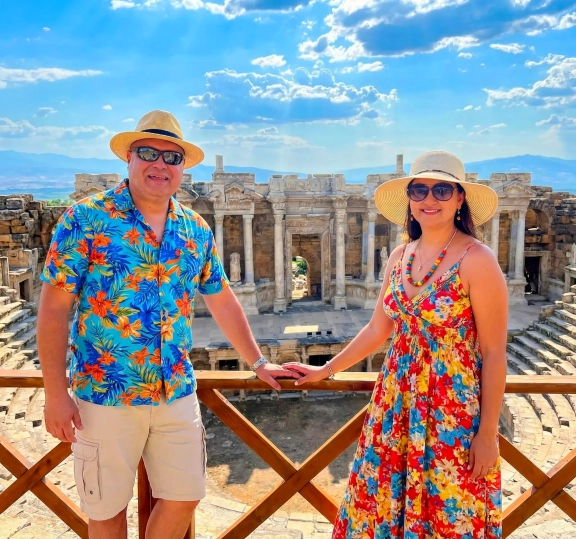
Explore biblical Laodicea and Pamukkale on a full-day route from Denizli with Laodicea Ancient City, Hierapolis, white travertines, and...
TRD155
14 Hours (Full-Day)
1 City • 4 Places
From Izmir
Join a 2 days Pergamum Sardis biblical heritage route tour from Izmir by car with Pergamum Acropolis, Asclepion Ancient Site, Red...
TRP156
1 Night/2 Days
2 Cities • 8 Places
From Izmir
Join a 2 days Ephesus Sardis Jewish heritage discovery tour from Izmir by car with Ephesus Ruins, House of Virgin Mary, Temple of...
TRP157
1 Night/2 Days
2 Cities • 8 Places
From Istanbul
Book a full-day Konya day tour by flight from Istanbul with private guiding, Mevlana Museum, Seljuk madrasahs, Alaaddin Hill, and UNESCO...
TRD157
10 Hours (Full-Day)
1 City • 7 Places
From Istanbul
Book a 2 days Ephesus and Samos island heritage escape from Istanbul with ferry transfer, including Ephesus Ancient City, House of Virgin...
TRP158
1 Night/2 Days
3 Cities • 6 Places
From Ankara
Take a full-day Konya day trip by train or bus from Ankara with private guiding, Mevlana Museum, Seljuk madrasahs, Alaaddin Hill, and...
TRD158
10 Hours (Full-Day)
1 City • 7 Places

From Istanbul
Join a 2 days Pamukkale Aphrodisias Ephesus heritage line tour from Istanbul including Pamukkale, Hierapolis Ancient City, Cleopatra...
TRP159
1 Night/2 Days
3 Cities • 9 Places
From Marmaris
Discover Marmaris in 4 hours with a private city tour from Marmaris hotels or cruise port, including Marmaris Castle, Old Bazaar,...
TRD159
4 Hours (Half-Day)
1 City • 6 Places

From Marmaris
Take a full-day private one day regular Pamukkale tour from Marmaris with visits to Pamukkale travertines, Hierapolis Ancient City,...
TRD161
12 Hours (Full-Day)
1 City • 3 Places
From Istanbul
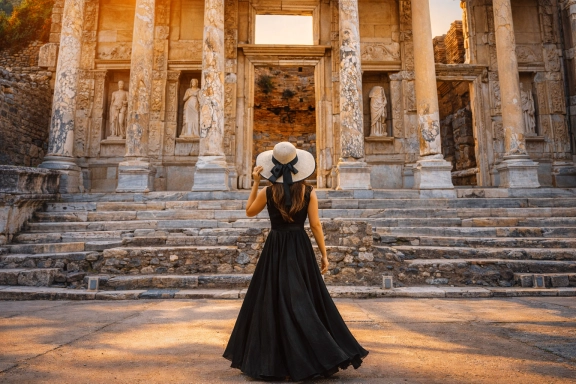
Travel from Istanbul by overnight bus for a full-day private Ephesus tour including Ephesus Ancient City, House of Virgin Mary, Temple of...
TRD162
11 Hours (Full-Day)
1 City • 4 Places
From Istanbul
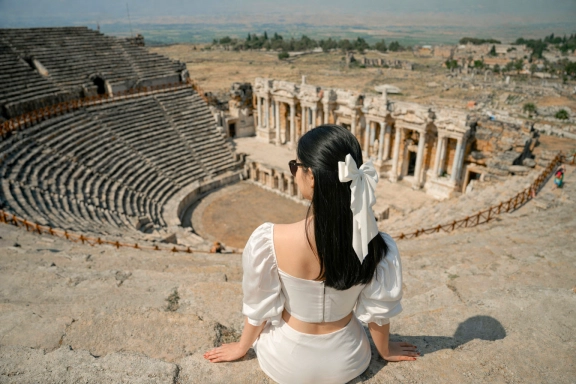
Travel from Istanbul by overnight bus for a full-day private Pamukkale tour including Hierapolis Ancient City, white travertine terraces,...
TRD163
11 Hours (Full-Day)
1 City • 3 Places
From Istanbul
Discover Biblical Smyrna on a full-day private Izmir tour from Istanbul by flight, including Kadifekale, Agora, St Polycarp Church, Izmir...
TRD164
11 Hours (Full-Day)
1 City • 7 Places
Academic travel in Turkey and Greece opens a broader field of study than most general cultural itineraries because the journey can move between archaeology, religion, architecture, epigraphy, urban form and regional identity without losing coherence. Gigil Travel works well for this style of travel because the routes are already structured around places that naturally belong in the same intellectual conversation. A group interested in the ancient city, for example, can connect field observation with museum collections, settlement history and sacred geography. That makes the experience useful not only for formal study groups but also for travelers who simply want evidence and explanation to travel together. Academic touring becomes strongest when each destination adds another layer of understanding.
Turkey is the clearest foundation for academic touring because its western corridor alone brings together Ephesus, Pergamon, Sardis, Aphrodisias, Hierapolis and related sites within a workable regional structure. Instead of scattering attention across unrelated stops, the route can follow a recognizable sequence through major classical and late antique centers. This is especially helpful for travelers who want the connections between politics, religion, commerce and daily life to remain visible throughout the journey. The geography itself supports comparative study, which is one reason Turkey remains central to the subject. A serious academic route benefits from that concentration of material.
The Ephesus region is one of the most effective study environments because archaeology, sacred history and urban development all meet in the same landscape. Travelers using Ephesus tours can focus on the city plan, the library zone, domestic life, cult history and the surrounding Christian tradition without needing to force the material into a narrow theme. That flexibility helps historians, theologians and classicists work from the same destination while emphasizing different questions. It also makes Ephesus suitable for repeat visitors who want to deepen their understanding rather than simply revisit a famous site. Few places in the region offer so much intellectual range in one stop.
Izmir and the wider west Anatolian coast bring another level of academic value because they connect ancient remains with the life of modern port cities and layered communities. Routes through Izmir tours allow travelers to think about continuity, trade, migration and minority heritage alongside the more familiar archaeology of the region. This matters when the goal is not only to look at ruins, but also to understand how cities evolve and adapt. Study-oriented travel becomes richer when the modern city remains part of the discussion. That broader urban frame is one of Izmirs strongest contributions.
Biblical and early Christian study also fits naturally into academic touring across western Turkey. The Biblical Ephesus day tour is especially useful for travelers who want to place scriptural memory within the physical reality of the city and its surrounding sacred landscape. Nearby routes can then extend toward the Seven Churches corridor or to related sites that deepen the historical frame. This creates a more disciplined understanding of Christian travel, because the emphasis remains on context, chronology and place. The subject stays grounded in the landscape instead of floating as abstract religious memory.
Jewish heritage brings another strong dimension to academic travel in Turkey. The Jewish heritage Izmir and Ephesus day tour helps travelers examine synagogue history, community life, urban quarters and the longer story of minority presence in the Aegean region. That perspective widens the route in a meaningful way because it shows the eastern Mediterranean as a shared world rather than a single-civilization narrative. Academic travel becomes stronger when multiple traditions are studied within the same geography. The result is a more honest and more complete regional understanding.
Pamukkale and Aphrodisias offer a different but equally important kind of study environment. The Pamukkale and Aphrodisias day trip by flight is useful because it combines a major urban archaeological site with a landscape that shaped settlement, healing and pilgrimage. This pairing encourages discussion about environment, architecture and religious practice in ways that a single-site visit often cannot. It also shows how natural setting can influence the social and sacred life of a city. Academic touring becomes richer when geography is treated as part of the historical record.
Northwestern Turkey brings the Aegean and biblical world into contact with older maritime and colonial histories. The Assos and Alexandria Troas biblical day tour helps connect philosophy, port networks, early Christianity and regional exchange across the north Aegean coast. These places are often overshadowed by larger names, yet they are extremely valuable for travelers who want a more complete view of the region. Academic travel benefits from including such secondary centers because they reveal the full structure of an ancient world, not only its most famous capitals. That wider frame improves both historical accuracy and intellectual depth.
Anatolia outside the Aegean adds central and eastern routes that widen the subject even further. From Hittite and Phrygian material to Seljuk, Ottoman and republican layers, the landmass supports a long chronology that few regions can match. Travelers who move inland begin to see how different political, religious and linguistic worlds overlap across centuries. This is important for academic touring because it breaks the habit of reducing Turkey only to the classical coast. A broader Anatolian route often produces the strongest comparative understanding.
Greece enters the academic theme most naturally where classical cities, Aegean crossings and early Christian geography can be studied in relation to western Anatolia. Routes toward Athens, the islands and selected mainland sites are especially useful for travelers who want to compare civic form, sacred space and maritime exchange on both sides of the sea. The value of Greece here is not that it replaces Turkey, but that it completes a larger eastern Mediterranean argument. Academic travel becomes more persuasive when the sea is understood as a connector rather than a boundary. That is why Turkey and Greece work so well together for this subject.
Study groups often travel most effectively when the itinerary stays selective. Too many unrelated stops can dilute the subject, while a smaller number of well-chosen places allows time for reading, discussion and interpretation. This is true whether the theme is archaeology, biblical history, Jewish heritage or urban continuity. Academic touring works best when the route leaves room for observation and thought. Depth is usually more valuable than speed.
Museums, local districts and travel time also matter because they connect field learning to material culture and regional life. A well-built route allows travelers to compare what they see in the landscape with what is preserved in collections, inscriptions and local memory. This strengthens the educational value of the journey and prevents the trip from turning into a sequence of disconnected site visits. For academic travelers, these bridges are often as important as the major monuments themselves. Understanding grows when evidence from different settings can be read together.
Academic tours in Turkey and Greece therefore work best as carefully connected learning journeys rather than simple sightseeing circuits. Gigil Travel is especially useful where archaeology, religion, city history and regional comparison can be brought into one structured route. Turkey remains the main body of the subject because of its density and range, while Greece adds a meaningful comparative extension across the Aegean. Together they create a travel framework that suits serious curiosity, group study and destination-based learning. That combination is what gives academic travel its lasting value.